A Third Way in the Sports Debate:
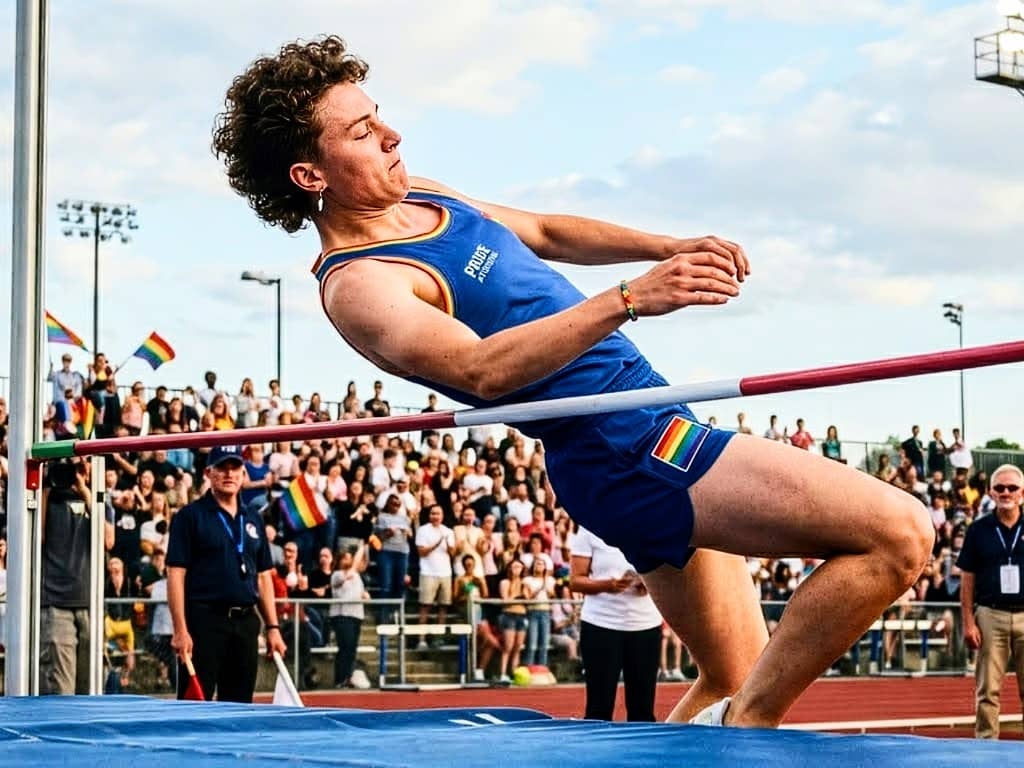
Why a Dedicated LGBT Sports Division Could Solve What Bans and Blanket Inclusion Cannot
The question of who belongs on which team has become one of the most contentious issues in American sports. On June 30, 2026, the U.S. Supreme Court ruled 6–3 in Little v. Hecox, upholding Idaho's and West Virginia's laws that restrict girls' and women's school sports to athletes who are female at birth. Three months earlier, the International Olympic Committee announced that eligibility for any female category at the Olympic Games would be limited to athletes who screen negative for the SRY gene, a policy that takes effect at the 2028 Los Angeles Games. USA Hockey and USA Rugby made similar changes to their women's divisions in late 2025 and early 2026. Roughly two dozen U.S. states now restrict transgender participation in girls' and women's school sports, while another twenty-plus states, mostly under Democratic governance, continue to allow inclusion based on gender identity.
What almost never gets discussed in this back-and-forth is a third option that sits outside the ban-or-include framework entirely: building a real, resourced, competitive sports division for LGBT and transgender athletes, run with the same seriousness as men's and women's leagues. Not a symbolic afterthought. A genuine third category, sport by sport — soccer, volleyball, basketball, gymnastics, swimming — with its own competitive tiers, its own champions, and its own visibility. MyTSV believes this idea deserves far more attention than it has received, especially here in Chicago, where the infrastructure for something like this already exists in embryonic form.
The Core of the Conflict
Nearly everyone in this debate says they care about fairness. The disagreement is over what fairness means. Supporters of restrictions argue that male puberty confers durable physical advantages — in height, bone density, lung capacity, and muscle mass — that hormone therapy does not fully erase, and that allowing transgender women into female categories therefore displaces cisgender women from rosters, podiums, and scholarships. Justice Brett Kavanaugh's majority opinion in Little v. Hecox leaned directly on this reasoning, writing that physical differences between men and women are "enduring" and that ignoring them denies equal opportunity to female athletes.
Opponents counter that categorical bans punish an entire group for a competitive question that plays out very differently sport by sport, and that the science is more mixed than the headlines suggest. A 2026 meta-analysis in the British Journal of Sports Medicine found that transgender women who had undergone at least one to three years of hormone therapy retained higher lean body mass on average but showed comparable general fitness levels to cisgender women in several measures. Rights groups such as the Sport & Rights Alliance argue that blanket bans and genetic screening amount to policing every woman's body, not just transgender athletes, since ambiguous or intersex results can sweep up cisgender women too.
Both sides are arguing from real evidence and real stakes. That is precisely why the debate keeps producing court cases and legislation instead of consensus — the two positions, applied literally, cannot both be fully satisfied within a strict two-category system.
The Idea: A Genuine Third Division
The "open" or "third category" concept is not new, and it is no longer purely theoretical. British Triathlon adopted it in 2022, creating a female category restricted to athletes female at birth and an "open" category for men, transgender athletes, and nonbinary athletes. Philosophers writing in academic sport-ethics journals — Jon Pike at The Open University, along with researchers such as Ana Schneider and Ivo Martínková — have proposed similar models for years, arguing that a well-built open or gender-diverse category can reconcile the fairness concern with the inclusion concern rather than forcing a choice between them. The IOC's new 2026 policy quietly builds on this same logic: athletes who screen SRY-positive are explicitly still eligible for "any open category, or in sports and events that do not classify athletes by sex."
The MyTSV proposal takes that logic and extends it constructively: instead of treating the open or third category as a leftover bracket, build it out as its own destination league across the sports people actually want to play — soccer, volleyball, basketball, gymnastics, swimming, and beyond — with real coaching, real facilities, real publicity, and real competitive tiers from recreational to elite. A division people choose to join because it offers something, not because they were excluded from somewhere else.
Chicago Already Has the Foundation
This is not a hypothetical for Chicago. The city is already home to roughly four dozen LGBTQ+ recreational sports leagues, according to the United States Gay Sports Network, covering everything from soccer and volleyball to swimming, basketball, and rugby. The Chicago Metropolitan Sports Association, founded in 1978 as the Gay Athletic Association, is the largest LGBTQ+ sports organization in the Midwest, with programs across basketball, softball, volleyball, bowling, and more. The Athletic Alliance of Chicago and Stonewall Sports Chicago run parallel league structures built around inclusion and community. What Chicago has built at the grassroots level over four decades is exactly the raw material a more formalized, competitive third division would need: organizational experience, facility relationships, and a large, engaged participant base. The gap is not interest — it is structure, funding, and a competitive pathway above the purely recreational level.
Why This Matters More Than a Compromise
Framed only as a political compromise, a third category risks feeling like a consolation prize — and critics are right to flag that risk. But framed as its own legitimate athletic pursuit, it does something a ban cannot: it keeps people in sport. Research on LGBT youth consistently links athletic participation to protective effects on mental health and social belonging, benefits that are lost entirely when a young person is excluded outright rather than redirected to another serious competitive option.
It also solves a problem that a "just include everyone in the category matching gender identity" policy cannot fully solve either: the concern, however contested, that some competitors could carry a physical advantage that displaces others. Sport-by-sport design matters here — powerlifting, distance running, gymnastics, and volleyball reward very different physical qualities, and a 2025 article in the Journal of the Endocrine Society argued that sport-specific solutions are likely to work better than one-size-fits-all national rules. A dedicated division built with that nuance, rather than a single blanket rule, has a better chance of being both competitive and credible.
Where the Idea Runs Into Real Resistance
An honest accounting has to include the idea's real failures and its real critics, because they are substantial.
The clearest cautionary tale is World Aquatics' 2023 "open category" swimming event in Berlin, which organizers canceled days before it began after receiving zero entries. Former competitive swimmers and advocates for restriction argued this proved transgender athletes are not actually seeking a fair, separate lane — they are seeking access to women's competition specifically. Transgender researcher Joanna Harper, herself a distance runner, has made a related but different argument: at a 2025 "Play the Game" conference panel, she opposed open-category proposals on the grounds that the category would in practice be dominated by cisgender men and that most transgender athletes "would rather quit their sport" than compete in a separate division that implicitly labels them a third gender.
That framing objection is echoed by trans-advocacy organizations. The Massachusetts Transgender Political Coalition has argued that routing trans athletes into a separate or open category, rather than the category matching their gender identity, is itself a form of segregation — one that treats trans men and women as belonging to a third gender rather than the gender they identify with, undermining the autonomy argument that motivates trans-inclusion advocacy in the first place. There is also a practical funding question no one has fully answered: elite sport funnels resources — scholarships, sponsorships, broadcast deals — through men's and women's categories built up over a century. A third category competing for a meaningful share of that same attention and money, rather than existing on paper only, is a genuinely difficult institution-building problem, not just a labeling one.
The Bottom Line
The two dominant positions in this debate — full inclusion in female categories versus categorical exclusion — are both responding to something real, and neither has produced a stable consensus after years of litigation, legislation, and international policy reversals. A dedicated, well-resourced LGBT and open sports division is not a magic fix, and its actual track record so far is mixed: it works as club-level infrastructure in cities like Chicago, and it has struggled to generate participation at the elite international level. But as a serious, funded, competitive alternative — rather than a symbolic afterthought bolted onto existing leagues — it remains one of the few proposals on the table that tries to expand opportunity instead of just reallocating a fixed set of roster spots. Given Chicago's existing base of nearly fifty LGBTQ+ recreational leagues, this city may be as well positioned as any in the country to actually test whether the idea can work above the club level.
—
Sources and further reading: Supreme Court opinion in Little v. Hecox (June 30, 2026); IOC Policy on the Protection of the Female (Women's) Category in Olympic Sport (March 2026); British Journal of Sports Medicine meta-analysis (2026); British Triathlon transgender policy announcement (2022); Journal of the Endocrine Society, "Fairness for Transgender People in Sport"; Frontiers in Sports and Active Living; Massachusetts Transgender Political Coalition sports FAQ; United States Gay Sports Network and Chicago Metropolitan Sports Association league listings.
Comments
More Blogs
Explore more articles that you may find interesting.
