Best 10 home DC Fast Chargers2026
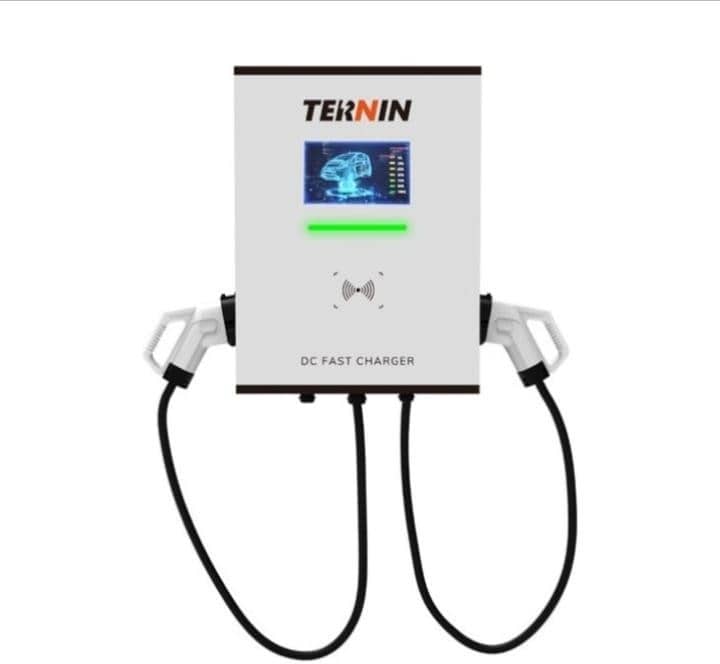
DC fast chargers power the e EV revolution. Lea knows how they work, their benefits, challenges, and future. Get answers to key FAQs abo Ut charging speed, cost, and battery health.
What is a DC fast charger?
Imagine pulling into a charging station, plugging in your e electric vehicle, and in the time it takes to enjoy a coffee, your battery is topped up and ready for hundreds of miles of driving. This isn't fiction—it's the reality made possible by DC Charging.
the technology that's solving one of the biggest concerns about electric vehicle adoption: charging speed.
Unlike the Level 1 and Level 2 AC chargers that convert alternating current from the grid to direct current for your car's battery (a slow process handled by the
vehicle's onboard charger), DC fast chargers deliver direct current straight to the battery. By bypassing the car's converter and supplying power at much higher voltages and currents, these chargers can add significant range in mere minutes rather than hours.
How DC Fast Charging Works: The Technical Breakdown
At its core, a DC fast charger is essentially a sophisticated power conversion and delivery system. Here's what happens when you plug in:
Communication Handshake: The charger and your car's Battery Management System (BMS) communicate to determine optimal charging parameters.
Power Conversion: The station converts AC grid power to DC at the required voltage (typically 400V to 800V for modern EVs).
Precise Delivery: Following the BMS's instructions, it delivers power at a precisely controlled voltage and current level.
Curve Ma engagement: Charging follows a curve—starting at peak power when the battery is low, then gradually tapering off as it fills to protect battery health.
This direct delivery system allows for power levels ranging from 50 kW to an astounding 350 kW and beyond. At 350 kW, some vertices can add about 200 miles of range in just 15 minutes.
The Three Main DC Fast Charging Standards
Not all fast chargers are created equal, and compatibility matters. Here are the three dominant standards:
The most common standard in North America and Europe, CCS combines AC and DC charging ports in one connector. It's becoming the de facto standard for most new EVs outside of Tesla.
- Chad memo
Originally developed in Japan, this standard is
common among Asian manufacturers like Nissan and MIT's Bishi. While its market share is declining, it remains important for many existing vehicles.
- Tesla Supercharger
Tesla's proprietary network, known for its reliability and s seamless user experience. With the adoption of the North American Charging Standard (NACS)—based on Tesla's connector—many manufacturers are now planning to integrate this system into future models.
The Benefits: Why DC Fast Charging Is a Game-Changing Time Efficiency
The most obvious s advantage is speed. What takes 8+ hours on Level 2 charging takes 20-40 minutes with DC Fast Charging, making long-distance EV travel practical.
Enabling Long-Distance Travel
Fast chargers along highway corridors create the electric equivalent of gas stations, enabling road trips that were previously Challen gang for EV owners.
Supporting EV Adoption
Range anxiety remains a top barrier to EV adoption. A robust fast-charging network directly addresses this c concern, making EVs viable for more drivers, including those without home charging options.
Future-Proofing
As battery capacities increase, faster charging becomes essential. New 800V architecture in vehicles like the Hyundai Ioniq 5 and Porsche Taycan can accept higher power levels, making g charging stops even s hurter.
Challenges and Considerations Cost
DC Fa set Chargers are expensive—ranging from $50,000 to $150,000+ for installation, not including ongoing maintenance and electricity costs.
Grid Impact
High-power chargers require substantial electrical infrastructure. An A-angle 350 kW charger draws as much power as 50 Ave rage homes simultaneously.
Battery Health Considerations
While modern batteries and thermal management systems are designed for fast charging, frequent use se of the highest power levels can accelerate degradation compared to slower charging methods.
Availability and Reliability
Although networks are expanding rapidly, charger availability still lags behind demand inmany areas, and reliability issuesoccasionally frustrate users.
The Future of DC Fast Charging
The technology continues to evolve rapidly:
Ultra-Fast Charging
Next-generation chargers pushing beyond 350 kW to 500 kW and even 1 MW for commercial vehicles are in development.
Battery Buffering
Some stations are incorporating on-site battery storage to reduce grid demand and costs while ensuring consistent power avia lability.
Vehicle-to-Grid (V2G) Integration
Future systems may allow EVs to discharge back to the grid during peak demand, turning the charging n network into a distributed energy resource e.
Improved User Experience
Automated payment, better availability information, and streamlined authentication processes are making charging increasingly seamless.
Maximizing Your DC Fast Charging Experience
For EV owner s, here are some tips for optimal fast charging:
Charge when battery is low: Fast charging is most efficient between 20-80% state of charge
Precondition your battery: Many EVs have a "navigate to charger" feature that warms the battery for optimalcharging speed
Plan ahead: Use apps to identify reliable charging set actions along your route
Be charger-agnostic: Having ng adapters or accounts for multiple networks KS ensures flexibility
Frequently Asked Questions About DC Fast Chargers
Q: How fast is DC Fast Charging compared to other options?
A: DC Fast Ch arguers are e signify I cantily faster than Level 1 or Level 2 chargers. While Level 2 adds 20-30m lies per Hou r, DC FastChargers can add100-200 miles in 20-30 minutes, with the fastest modelsadding up to 20 milesper minute underideal con dictions.
Q: Are all Elec trick vehicles compatible with D C Fast Ch raging?
A: Most modern EVs support some level of DC Fast Charging, but capabilities vary. Check your vehicle's maximum charging rate and co nectar type. Most new EVs in North America use CCS or will soon adoptNACS (Tesla's standard).
Q: Does frequent fast charging damage my EV battery?
A: Modern EVs have e sophistical ted the Ermal man agreement systems to protect batteries during fast charging. While occasion Onal fast charging has minimal impact, relying exclusively on it for daily charging may lead to slightly faster degradation compared to slower Level 2 charging. Most manufacturers des in batteries to handle regular fast charging.
Comments
More Blogs
Explore more articles that you may find interesting.
