High-Tech, Low-Fi Revolution: How AI Is Disrupting (and Supercharging) Photography & Video in 2026
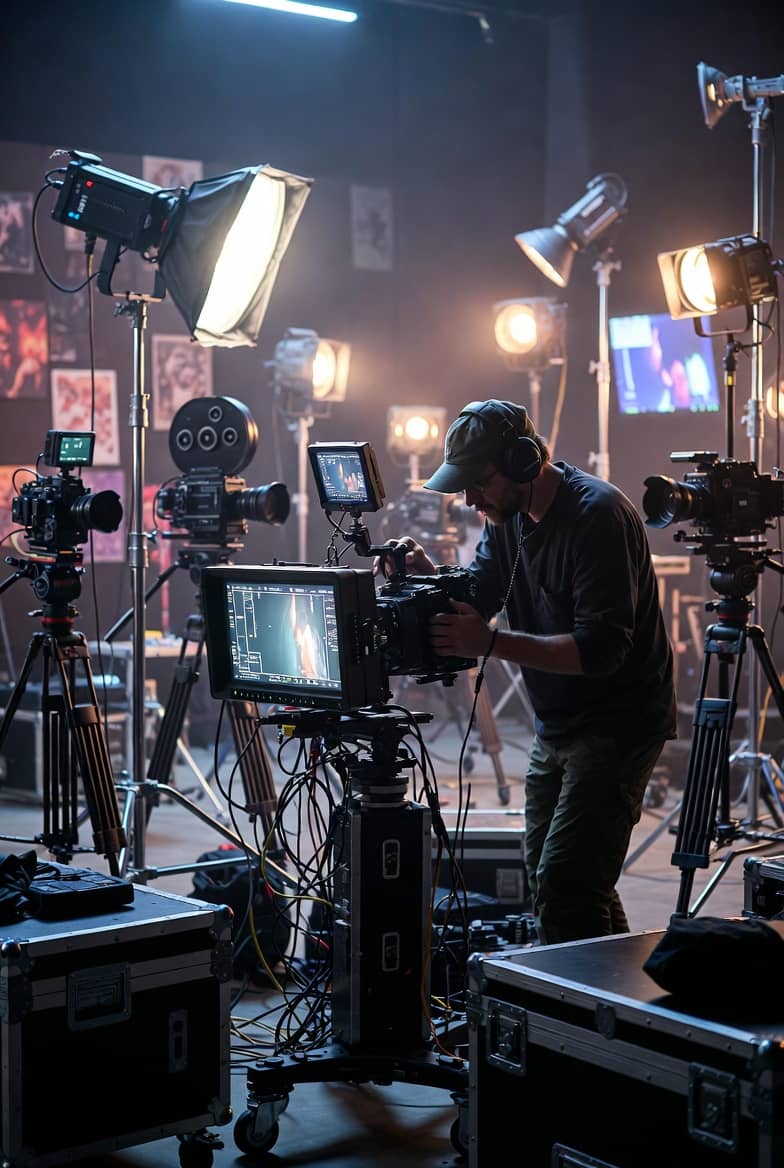
Photography and videography in 2026 are being reshaped by a tension between ultra‑powerful AI tools and a strong cultural swing toward imperfect, human‑feeling visuals.[1][2] This “high‑tech, low‑fi” paradox is real—and it can either compound confusion or massively reward those who design a clear system around it.
## 1. Authenticity over perfection
Professional surveys and trend reports for 2026 consistently show that clients are prioritizing emotion, story, and imperfection over technical flawlessness.[1][2] This aligns almost one‑to‑one with the “authenticity pivot” you described.
- Emotion and story: A large 2026 trend analysis of wedding and portrait photographers found that story‑driven, documentary‑style work is rising across genres, especially in weddings, with couples preferring storytelling over flawless editorial sets.[1][2]
- Imperfection as a feature: The same report notes that “less perfection, more human” is the core direction—texture, motion, real expressions, and imperfect analog aesthetics are seen as “luxury” because they feel honest, not manufactured.[1]
- Documentary style: “Fly‑on‑the‑wall” and candid coverage, particularly in weddings, is highlighted as a major direction for 2026, displacing rigidly posed, highly retouched photo sets.[1][2]
### Film and the “analog paradox”
Film is not a nostalgia niche anymore; it’s positioned as a conscious counterweight to AI and infinite digital perfection.
- Film resurgence: Film photography is predicted to “explode” in 2026, especially 35mm and analog looks, because it carries visible imperfections and a tangible, finite feel.[1]
- Rebellion against AI imagery: A 2026 film‑focused trend piece explicitly frames film as a rebellion against AI‑generated imagery; in a world of endlessly editable visuals, film’s limitations and subtle flaws are part of its perceived authenticity and value.[3]
This reinforces your “hybrid packages” idea: digital for speed and volume, film or film‑like workflows for emotional and brand positioning.
## 2. AI as default infrastructure, not (yet) a replacement
Across 2025–2026 industry analysis, AI is described less as an existential threat and more as invisible infrastructure that handles volume, consistency, and drudgery.[1][4][5][2]
### Workflow automation
- Culling and bulk editing: Tools like Aftershoot and Imagen AI learn a photographer’s editing style, automatically cull thousands of images, and apply consistent looks in minutes instead of days for high‑volume shooters (weddings, events, e‑commerce).[1][4][5]
- Time savings: One 2026 AI tools report cites data that photographers using AI culling/editing collectively saved an estimated 89 million hours in 2025, averaging about 473 hours (roughly 12 work weeks) per photographer.[5]
- Expanded AI utilities: Modern AI tools provide intelligent masking, object removal, sky replacement, noise reduction, upscaling, and auto‑keywording, dramatically compressing the technical portion of post‑production.[4][6][5]
The meta‑trend is what your prompt implies: AI is doing the “grunt work,” allowing pros to reposition themselves as directors of taste, narrative, and client experience rather than button‑pushers.
### Semantic and generative editing

- Semantic / language‑based edits: Mainstream software already allows natural‑language prompts to change skies, moods, or specific regions by just describing what you want (e.g., sky replacements, moodier lighting).[4][5]
- Generative expansion: AI is being used to extend backgrounds, remove or add elements, or “uncrop” images for wider campaigns, effectively multiplying deliverables from a single capture.[4][5]
This directly mirrors your “uncrop” and “change the lighting post‑shoot” point; the technology exists and is now normal within pro workflows.
### Is AI destroying or crediting photographers?
Industry voices and data suggest three simultaneous dynamics rather than a simple “destroy vs. protect” outcome:
1. **Commoditization of basic output**
- AI makes technically competent images (or edits) cheap and abundant, which erodes the perceived value of generic, interchangeable work—especially in low‑end product work, simple headshots, and stock‑like content.[4][5]
- Clients who only want “a clear photo” or “a quick background removal” are now more likely to DIY or hire cheaper providers using AI presets.
2. **Premium on style, story, and relationship**
- Surveys of working photographers emphasize that AI “streamlines culling, editing, and color work” but “the art remains human,” with authenticity and emotional connection described as the “luxury look of 2026.”[1]
- Clients increasingly buy a creative perspective, narrative approach, and trust in a human expert who can listen, interpret, and translate their identity into visuals—not just pixels.

3. **New skill‑stack and role**
- Photographers who integrate AI strategically are effectively becoming creative directors plus system builders: they design capture workflows that maximize what AI can enhance later, and they architect content systems (multi‑format outputs, recurring campaigns) rather than deliver one‑off files.[4][5][2]
Net effect: AI is hollowing out the middle and bottom of the market while increasing leverage for photographers who differentiate via taste, brand, and systems thinking.
## 3. From one‑off service to content system
Your “service → system” idea is strongly supported by what’s happening in the broader creator economy and brand marketing.
### Multi‑format, mobile‑first expectations
- Multi‑asset outputs: Brands and clients now expect a single shoot to provide a mix of stills, short‑form vertical clips, longer horizontal edits, and BTS content for different touchpoints, not just a gallery of images.[4][5][7]
- Vertical‑first: Creator economy reports show continued explosive investment in short‑form video and mobile feeds; most brand‑creator collaborations are optimized for vertical social formats because that’s where attention and ad dollars are concentrated.[8][7]
This is pushing pros toward “shoot-to-fracture” workflows: designing each session to yield a library of assets pre‑planned for different platforms and aspect ratios.
### Retainers and subscription models
- Ongoing content needs: Both B2B and consumer brands are increasing budgets for creator‑driven content as a continuous brand awareness and trust‑building engine, not a one‑time campaign.[8][9][7]
- Retainer logic: LinkedIn and creator‑economy analyses show a shift to longer‑term deals, ambassador arrangements, and retainers where creators and content producers are paid to provide a stream of consistent, on‑brand content over months, not isolated deliverables.[8][9][7]
For photographers and videographers, this maps directly onto the “monthly content subscription” or “brand content retainer” model you mentioned.
#### Example structure (aligned with current market behavior)[9][7]
- 1–2 shoot days per month
- Deliverables split into: hero photos, social‑first clips (vertical), occasional long‑form edits, and BTS/UGC‑style snippets
- Optional add‑ons: strategy sessions, content planning, AI‑assisted repurposing of past assets
## 4. High‑growth niches and how AI shapes them
Your list of “where the money is moving” also matches independent predictions for 2026.
### Personal branding
- Personal identity content: Trend reports indicate that portraits are increasingly seen as “identity,” particularly for entrepreneurs, creators, and professionals building personal brands; images must communicate voice and story, not just appearance.[1][9]
- Rise of LinkedIn and “corporate creators”: Analyses of the 2026 personal branding space highlight a boom in “LinkedIn creators,” internal employee‑creators, and executive branding as budget lines; visual media is a key component of these strategies.[8][9]
Photographers who can translate someone’s positioning, audience, and narrative into visual language (poses, locations, styling, and sequencing) stand to benefit, especially if they bundle photo + vertical video.
### Immersive and spatial media
- VR/AR and 3D‑like experiences: While still niche compared to standard video, there is growing demand for 360‑degree and immersive content as major platforms experiment with spatial experiences.[4][7]
- AI + spatial: AI tools can assist in stitching, noise reduction, and even generative completion of 360 assets, but capture still depends on specialized hardware and spatial storytelling skills.[4][5]
This niche favors early adopters willing to invest in both gear and narrative frameworks for spatial media (e.g., guided tours, immersive brand experiences).
### Eco‑conscious production
- Sustainability as a selection factor: Corporate and agency clients are under increasing pressure to demonstrate sustainable practices and are adopting “green” criteria in creative production, including energy use, travel, and materials.[4]
- AI as a sustainability lever: Remote previsualization, AI‑assisted planning, and smaller physical crews can reduce travel and reshoot frequency, indirectly supporting eco‑conscious workflows.[4][5]
Photographers who codify and communicate sustainable practices (minimal travel, virtual reviews, efficient lighting, responsible waste) can differentiate in RFPs and large corporate contracts.
## 5. The “too many tools” problem and strategic positioning
The overload of AI tools is not just a feeling; 2026 guides for photographers now devote entire sections to helping pros navigate the tool landscape and avoid fragmentation.[4][6][5]
### Why it feels overwhelming
- Fragmented stack: There are separate tools for pre‑production (moodboards, planning), capture assistance, culling, editing, retouching, asset management, and distribution, often with overlapping features and conflicting UX.[4][6][5]
- Constant updates: Rapid iteration means learning curves never end; presets, models, and interfaces change frequently, making it hard to build stable workflows.[6][5]
This complexity actually creates an opportunity: clients and less technical creators don’t want to manage this stack at all.
### How this can *credit* rather than destroy pros
1. **You become the systems architect**
- Pros can position themselves as the people who’ve already tested and integrated the right subset of tools into a smooth pipeline (from brief → shoot → AI‑assisted post → distribution‑ready assets).[4][5][2]
- The value isn’t knowing “all the tools,” but curating a minimal, reliable stack for specific client outcomes (e.g., weddings vs. SaaS brands vs. real estate).
2. **You translate messy AI capability into simple client promises**
- Instead of selling “we use AI,” you sell: faster turnaround, more variations per shoot, higher consistency, and better storytelling, all framed in client language (launch‑ready assets, social calendars, repurposed content).[4][5]
3. **You protect clients from risk and sameness**
- Ethical and brand‑safety concerns are growing: deepfakes, disclosure requirements, and generic “AI look” visuals are real worries for serious brands.[4]
- A human creative who can navigate these issues, maintain authenticity, and ensure legal/ethical comfort becomes more—not less—valuable.
### Where AI genuinely threatens
- Budget clients and small, low‑stakes tasks (basic headshots, simple product slates, background removal) may increasingly move to AI‑only solutions or non‑specialist operators running templates.[4][6][5]
- Photographers who sell only “I take sharp pictures and edit them nicely” without a clear style, niche, or system are most exposed, because AI can imitate “generic good” very efficiently.[4][5]
## 6. Strategic implications for photographers and videographers
Pulling the research together, the 2026 landscape rewards a specific kind of professional:
- **Story‑first, authenticity‑driven**: You lean into documentary, emotional, and analog‑inspired aesthetics, and you can articulate why your work feels human in an AI world.[1][3][2]
- **AI‑literate but selective**: You use a small set of AI tools for the repetitive 70–80% of your pipeline (culling, base edits, technical fixes) and preserve your time and energy for the creative 20% that defines your brand.[4][5]
- **System builder, not file vendor**: You package your work as ongoing content systems—multi‑format deliverables, retainers, and strategic planning—aligned with how brands invest in creators in 2026.[8][9][7]
- **Niche‑positioned**: You focus on lucrative, growing niches like personal branding, brand storytelling, and possibly spatial/immersive content, with clear offers and repeatable frameworks.[1][4][9][7]
In that sense, AI does not automatically destroy the photography and videography business; it destroys the idea that being a technician is enough, while amplifying the earning power of those who combine human storytelling, taste, and systems thinking with the new tools.[1][4][5][2]
Citations:
[1] The photography trends in 2026 will be for less perfection and more ... https://www.digitalcameraworld.com/tech/artificial-intelligence/the-trend-in-photography-in-2026-will-be-for-less-perfection-and-more-human-and-even-this-ai-focused-software-company-agrees
[2] The Top Five Photography Trends of 2026 | PetaPixel https://petapixel.com/2026/01/22/the-top-five-photography-trends-of-2026/
[3] Top Film Photography Trends For 2026 - Film Processing https://www.filmprocessing.co.uk/post/top-film-photography-trends-for-2026/
[4] AI in Photography & Graphics: 2025-2026 Trends - History of Icons https://historyoficons.com/blog/ai-in-photography-and-graphics-trends-workflow-changes-and-tools-for-2025-2026/
[5] AI Tools For Photographers Beyond Image Generation - Barnimages https://barnimages.com/blog/tools/best-ai-tools-photographers-2026/
[6] The Best AI Tools for Photographers in 2025 (Without a Subscription) https://www.on1.com/blog/ai-tools-for-photographers-in-2025/
[7] The Creator Economy Report 2026 & Beyond - YouTube https://www.youtube.com/watch?v=uBG5zBN8ldE
[8] 2026 Creator Economy Shift: Brands Pay Creators, AI Companies ... https://www.linkedin.com/posts/palak-tannaa-influencermarketingexpert_creatoreconomy-activity-7411277542801797120-Rfvx
[9] Predictions for Personal Branding and The Creator Economy in 2026 https://www.linkedin.com/pulse/predictions-personal-branding-creator-economy-2026-kait-ledonne-mg0ic
[10] Big is back in Stills' 2026 Trend Report https://www.itsnicethat.com/articles/stills-2026-trend-report-creative-industry-sponsored-content-170226
Comments
More Blogs
Explore more articles that you may find interesting.
