Nitrate Overuse, Nutrient Decline, and Genetic Adaptation
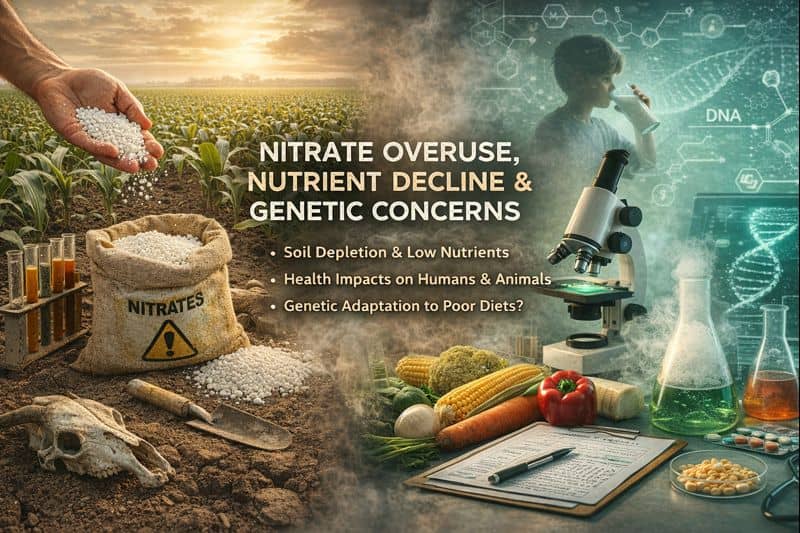
1. Soil Fertilizers and Crop Nutrient Loss
Modern high-yield farming uses large amounts of synthetic nitrogen (nitrate) fertilizers. While yields have risen, this has caused a nutrient-dilution effect in crops. For example, surveys show many fruits and vegetables now contain 15–50% less key minerals and vitamins than decades ago
pmc.ncbi.nlm.nih.gov
pmc.ncbi.nlm.nih.gov
. One review found 16–46% declines in calcium and 24–27% declines in iron across common crops over ~50 years
pmc.ncbi.nlm.nih.gov
. Excessive N-fertilizer also harms soil health: it depletes organic matter and leaches nitrates into water, which reduces nutrient availability for plants
pmc.ncbi.nlm.nih.gov
. In short, over‐application of nitrates can leave soils impoverished and crops lower in “authentic” micronutrients
pmc.ncbi.nlm.nih.gov
pmc.ncbi.nlm.nih.gov
Nitrogen fertilizers boost calories but dilute micronutrients. Over the last few decades many foods lost substantial levels of protein, calcium, iron, zinc, vitamins A and C, etc.
pmc.ncbi.nlm.nih.gov
.
https://mytsv.com/videos/global?service=Miscellaneous this to “Green Revolution” practices: high-yield varieties + heavy fertilizer use.
pmc.ncbi.nlm.nih.gov
pmc.ncbi.nlm.nih.gov
Long-term fertilizer runoff also harms soil microbes and pollutes water with nitrate, posing health hazards to people and livestock
pmc.ncbi.nlm.nih.gov
pmc.ncbi.nlm.nih.gov
2. Effects on People, Livestock and Pets
As a result of low-nutrient crops (and processed feeds), both humans and animals show adverse health trends. Human diets high in empty calories but low in micronutrients are tied to rising obesity, diabetes, and cognitive problems. For instance, children conceived during famines (very low-nutrient conditions) later had higher rates of diabetes, heart disease and even decreased cognitive function
mdpi.com
. Historical data show that grandchildren of malnourished mothers also suffer more metabolic diseases
mdpi.com
. These findings imply that diet quality (even before birth) can epigenetically “program” long-term health.
mdpi.com
Prenatal/early-life malnutrition leads to lifelong problems. The Dutch Hunger Winter study found that babies of starving pregnant mothers were more likely to develop metabolic syndrome and cognitive deficits
mdpi.com
.
Transgenerational impacts: Descendants of famine survivors show altered health. One review notes grandchildren of women who endured starvation were more prone to cardiovascular and metabolic diseases
mdpi.com
.
Livestock and pets: Animals fed low-quality feed show parallel issues. Nutritional epigenetics studies in farm animals demonstrate that diet alters fat deposition, growth and productivity
pmc.ncbi.nlm.nih.gov
. (For example, feed changes affect marbling and weight gain via epigenetic shifts.) Companion animals on processed “junk food” diets also suffer obesity and health decline (though detailed studies are limited).
Chemical pollutants: Overuse of pesticides and nitrates adds another burden. Agrochemicals have been linked to endocrine disruption, neurological effects and impaired nutrient absorption in humans and animals
pmc.ncbi.nlm.nih.gov
pmc.ncbi.nlm.nih.gov
. These toxins can worsen health, further reducing the body’s ability to use whatever nutrients are available.
3. Genetic and Epigenetic Responses to Nutrient Stress
Organisms respond to environmental stress through changes in gene expression. In plants, nitrogen availability is known to trigger epigenetic adjustments: DNA methylation and histone modifications change how N-response genes are turned on or off under high or low nitrate
ouci.dntb.gov.ua
. Similarly in animals, poor nutrition during development induces epigenetic adaptations. For example, human fetuses “epigenetically adapt” to nutrient scarcity by altering gene methylation patterns related to growth and metabolism
mdpi.com
. These adaptive changes are not new genes emerging, but rather existing genes being regulated differently based on diet.
Figure: Historical famines produced complex transgenerational effects. In the Swedish Överkalix famine (1867–1869), prepubertal starvation in grandparents improved grandchildren’s lifespan, whereas prenatal starvation in the Dutch (1944–45) and Chinese (1959–61) famines harmed descendants
nature.com
nature.com
. This suggests an epigenetic “memory” of nutritional stress, but no evidence of unknown “dormant” genes being activated.
For instance, population studies show that if a grandfather starved as a child, his grandsons lived significantly longer than expected (less diabetes and heart disease)
nature.com
nature.com
. Paradoxically, severe malnutrition during pregnancy causes the opposite: offspring exhibit poorer health and shorter lifespans
nature.com
nature.com
. Animal experiments mirror this mixed outcome: some starved rodents show extended lifespan, while others (especially offspring of underfed mothers) show reduced healthspan
nature.com
. In all cases, the effects are explained by epigenetic modifications (heritable changes in gene expression) – not by unlocking unknown genetic “superpowers.”
4. Predictions and Evidence for DNA Adaptation
Scientific consensus offers no magic solution of “dormant DNA activation.” Rather, predictions focus on measurable genetic and epigenetic processes. Current research suggests that chronic nutrient stress will continue to influence health via epigenetics and slow evolution, not instantaneous DNA rewiring. For example, studies of famine cohorts imply that nutritional stress can be inherited in gene regulation patterns
mdpi.com
nature.com
, but there is no evidence of novel beneficial genes suddenly appearing. In fact, the data above show both positive and negative transgenerational effects depending on timing and context
nature.com
nature.com
.
Long-term genetic adaptation would require many generations under selection. Some theorize that animals (including humans) might gradually evolve better nutrient-use efficiency, but this is speculative. No peer-reviewed study has documented any "awakening" of hidden genetic potential due to modern fertilizers or diet. On the contrary, endocrine disruptors and pollutants associated with agriculture can damage DNA or reproductive health
pmc.ncbi.nlm.nih.gov
pmc.ncbi.nlm.nih.gov
.
Rather than awaiting genetic miracles, most research emphasizes mitigation strategies. Reviews recommend improving soil fertility, crop varieties, and farming practices to restore nutrient density
pmc.ncbi.nlm.nih.gov
. For example, experts advocate biofortification, organic methods, and diverse cropping to raise micronutrient levels in food
pmc.ncbi.nlm.nih.gov
. In summary, predictions from the literature point to ongoing epigenetic effects of poor diet and the need for agricultural reform – not a sudden surge in beneficial DNA changes. No credible study supports the idea that nitrates will trigger “positive” DNA activation or conversely that DNA will irreversibly collapse under current farming practices
mdpi.com
nature.com
.
Sources: Peer-reviewed studies on nutrient dilution, epigenetics, and transgenerational effects
pmc.ncbi.nlm.nih.gov
pmc.ncbi.nlm.nih.gov
mdpi.com
nature.com
nature.com
. Agricultural reviews and health reports provide the data above
pmc.ncbi.nlm.nih.gov
pmc.ncbi.nlm.nih.gov
pmc.ncbi.nlm.nih.gov
.
Comments
More Blogs
Explore more articles that you may find interesting.
