Restaurant is a Great Family Business or Just a Waste of Time?
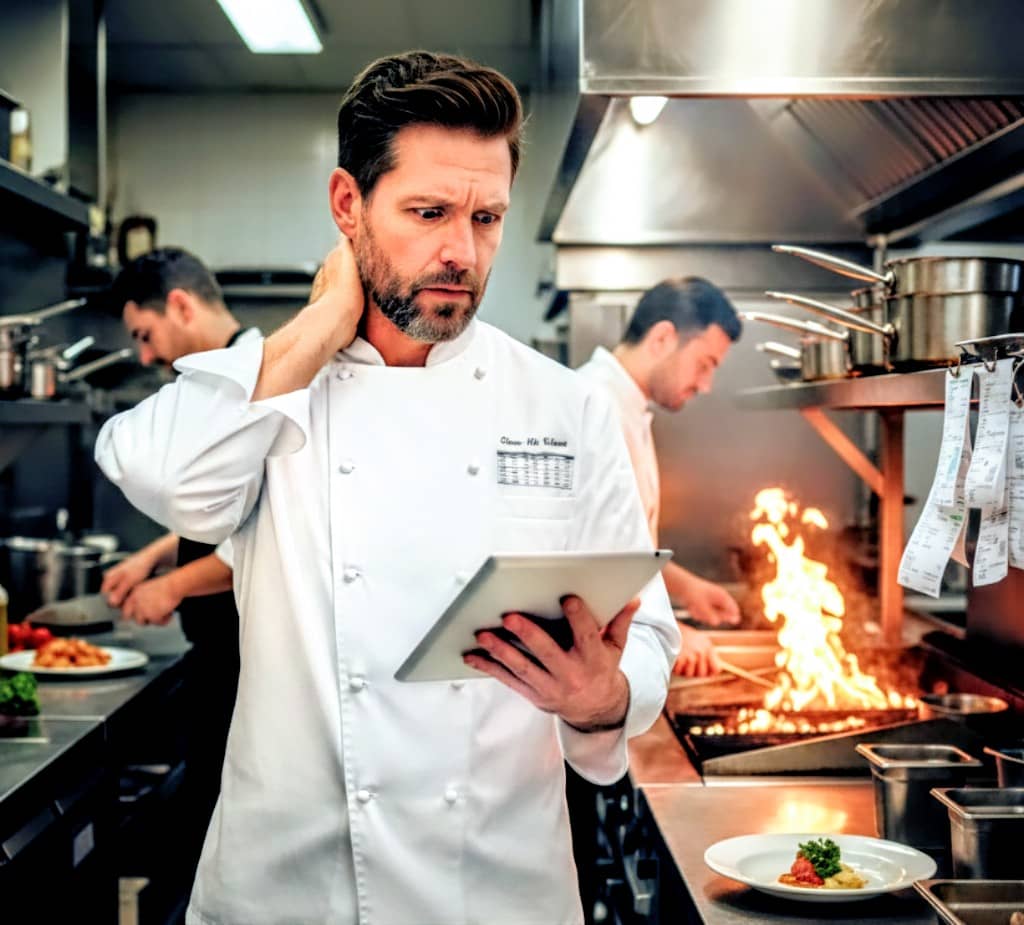
Current research into the 2024-2025 U.S. restaurant landscape validates your concerns: the industry is facing a period of "hyper-competition" where survival depends on operational efficiency and a stronger emotional connection with customers and staff.
Here is a breakdown of the current data and how a video-first platform like MYTSV.com positions itself as a strategic solution rather than just another listing.
I. The Reality Check: Is It "Waste of Time"?
The data suggests that the "traditional" restaurant model is broken, but the industry itself is not dead. It is simply purging inefficient operators.
* Profit Margins are Razor Thin: The average net profit margin for a full-service restaurant in 2024-2025 hovers between 3% and 5%. This means for every $100 in sales, the owner keeps only $3–$5.
* The Burnout Crisis: Recent reports indicate that nearly 78% of hospitality owners experienced burnout in the last year. The primary driver is not just long hours, but "decision fatigue" from constant staffing and supply chain fires.
* Inflation is Persistent: While general inflation has cooled, food-away-from-home prices are still projected to rise ~3.9% in 2025. Customers are price-sensitive, meaning you cannot easily pass these costs on without losing volume.
* The Labor Gap: Despite some recovery, 59% of operators still report extreme difficulty filling back-of-house (cook/chef) positions. The workforce has fundamentally changed; they demand "culture" and "career paths," not just a paycheck.
II. Why "Just Good Food" is No Longer Enough
In this environment, a restaurant cannot survive on food quality alone because the cost of customer acquisition has skyrocketed.
* The "Invisible" Listing Problem: On Google Maps or Yelp, your $25 artisanal burger looks exactly like a competitor's $15 frozen patty burger. A static photo cannot convey quality or labor.
* Review Fatigue: Customers are increasingly skeptical of written reviews (bot farms, fake 5-stars). They are looking for proof of the experience before they commit their limited dining budget.
III. The Strategic Solution: Video-First Directory (MYTSV.com)
A business directory like MYTSV.com is not a magic wand that fixes inflation, but it is a scalpel that addresses two specific bleeding points: Staffing and Value Perception.
1. Solving the Staffing Crisis (The "Employer Brand" Pivot)
Most restaurants post text-based job ads on Indeed ("Cook wanted, $18/hr"). This attracts low-quality candidates who are just price-shopping for wages.
* The Video Fix: On a video-first profile, you don't just show food; you show the kitchen culture.
* Video Idea: A 30-second clip of the Head Chef mentoring a line cook, or the team laughing during family meal.
* Result: You attract staff who want to work specifically for you because they see a healthy environment. This reduces turnover, which is the #1 silent killer of restaurant profits.
2. Justifying Higher Prices (Value Perception)
If you need to charge $30 for an entrée to survive, you must prove why it costs that much. A static photo cannot do this.
* The Video Fix: "Process Porn" videos (e.g., showing the 12-hour bone broth reduction or the hand-rolling of pasta).
* Psychology: When customers see the labor involved, their "willingness to pay" increases. They stop comparing you to a fast-food joint and start seeing you as an artisan.
* MYTSV Advantage: Unlike Instagram (where your video dies in 24 hours), the video lives permanently on your directory profile, converting every new searcher who finds you.
IV. Summary Recommendation
Is opening a restaurant a waste of time? Yes, if you plan to run it like it’s 2015 (static listings, invisible culture, competing on price).
No, if you adopt a "Media Company" mindset. You aren't just selling food; you are selling the story of the food and the people making it.
* Legacy Directories (Yelp/Google): Use them for address and hours.
* Video Directories (MYTSV): Use them to prove your value to high-paying customers and quality staff.
This is a "Media Company" mindset strategy. Instead of relying on passive listings, we use active video assets to solve specific business problems.
Here is the "3-Video Strategy" designed for a MYTSV.com profile to tackle the three biggest threats to your restaurant: Staffing, Price Resistance, and Trust.
Video 1: The "Why Work Here?" Asset (Solving the Labor Crisis)
* Target Audience: Cooks, servers, and bartenders who are tired of toxic environments.
* The Problem: Good staff don’t look for "jobs"; they look for "careers" and "sanity." A text ad on Indeed cannot prove your kitchen is not a nightmare.
* The Video Content:
* Length: 45–60 seconds.
* The Shot: Don’t interview the owner. Interview the Sous Chef or a Lead Server.
* The Script Concept: Ask them: "What is one thing about this kitchen that is different from the last place you worked?"
* Visuals: Show the team eating "Family Meal" together (proving you feed them well), the head chef teaching a junior cook a technique (proving mentorship), and the team laughing during prep.
* The ROI: You filter out lazy candidates and attract professionals looking for a home. This lowers turnover, saving you thousands in training costs.
Video 2: The "Justification" Asset (Solving Inflation & Price Resistance)
* Target Audience: The customer who looks at your menu online and thinks, " $28 for pasta? That's a rip-off."
* The Problem: Consumers do not understand COGS (Cost of Goods Sold). They think you are greedy. You need to show them the labor behind the price tag.
* The Video Content:
* Length: 30–90 seconds ("Process Porn").
* The Shot: Extreme close-ups of the prep process hours before opening.
* The Script Concept: No talking needed, just ambient kitchen sounds or a voiceover explaining the sourcing. "Our demi-glace takes 36 hours of reduction. We import this flour from a specific mill in Italy."
* Visuals: Hand-rolling pasta, butchering a whole fish, or the complex layering of a sauce.
* The ROI: This triggers the "Value Perception" psychology. When a customer sees the work, the price shifts from "expensive" to "worth it."
Video 3: The "Vibe Check" Asset (Solving the 'First Time' Anxiety)
* Target Audience: The Gen Z or Millennial diner who has anxiety about walking into a new place (e.g., "Is it too fancy? Is it too loud? What do I wear?").
* The Problem: Static photos are often staged and fake. New customers are afraid of feeling out of place.
* The Video Content:
* Length: 15–30 seconds.
* The Shot: A POV (Point of View) "Walkthrough." Start at the front door, walk to the host stand, pan across the dining room on a busy Friday night.
* The Script Concept: "Here is what Friday night feels like at [Restaurant Name]."
* Visuals: Capture the lighting, the noise level (ambient buzz), the dress code of actual guests, and the plating of a finished dish hitting a table.
* The ROI: It removes the mystery. The customer knows exactly what to expect, lowering the barrier to entry and reducing "no-shows."
Summary of Execution
Do not film these like a TV commercial. They should feel authentic and raw (documentary style).
* Where they live: These videos stay permanently pinned on your MYTSV.com profile.
* How they work:
* A link to Video 1 goes in every job posting you make.
* Video 2 is linked on your digital menu QR code.
* Video 3 is your "Video Business Card" for Google Maps and social bio links.
Visual Shot List for Video 2: The "Justification" Asset
(Solving Inflation & Price Resistance with "Process Porn")
This video must establish the labor and quality that goes into your food, justifying a higher price point by proving the customer is buying expertise, not just ingredients.
Key Rule: Minimize faces (except perhaps a shot of hands working). Focus entirely on the action, texture, and process.
Section 1: The Sourcing & Raw Quality (5–10 seconds)
* Goal: Establish high-quality ingredients immediately.
* Shots:
* Slow Pan: A close-up slow pan across beautifully arranged, fresh, seasonal vegetables in your prep area (e.g., vibrant heirloom tomatoes, perfect local herbs).
* The Unboxing: A quick shot of a chef inspecting a prime cut of meat or whole fish delivered from your purveyor (with the vendor's label/box subtly visible). Focus on the texture.
* The Signature Ingredient: Extreme close-up of the specific item that costs you money (e.g., saffron threads, high-quality olive oil being poured, or imported cheese rind).
Section 2: The Labor-Intensive Process (15–30 seconds)
* Goal: Prove the dish takes hours, not minutes, of human effort.
* Shots (Pick 3-4 that apply to your menu):
* Pasta Perfection: Hands quickly and methodically hand-rolling, cutting, or stamping pasta dough. Focus on the rhythmic movement and texture.
* The Stock Reduction: Close-up of rich, dark broth simmering slowly (a slow bubble). Maybe a shot of a chef adding bones/mirepoix to a huge stockpot. This visually says "hours of work."
* Detailed Prep: A close-up of a chef meticulously brunoise-cutting vegetables or carving a delicate garnish.
* Dough Work: Kneading bread, folding dough for laminated pastries, or stretching pizza dough. Show the strength and skill.
* Fire/Smoke: A dramatic shot of wood being added to an oven or smoker, or a quick flash of intense flame from a stove.
Section 3: Precision and Skill (10–15 seconds)
* Goal: Show that professional expertise is the key ingredient.
* Shots:
* The Weighing: A hand precisely weighing spices or ingredients on a digital scale. Suggests scientific accuracy.
* The Plating: The final, careful moment of plating—a sauce being painted with a spoon, micro-greens being placed with tweezers. The difference between home cooking and professional.
* The Final Garnish: A close-up of a finished dish being briefly scrutinized by the Head Chef for approval before it leaves the pass.
Section 4: The Transfer (5–10 seconds)
* Goal: Connect the kitchen work to the customer experience.
* Shots:
* A clean shot of a finished, beautiful dish being picked up by the server's clean hand from the pass.
* A quick, slow-motion shot of the dish being delivered and set down on the clean table (focus on the visual impact of the dish itself).
Audio & Pacing Notes
* Pacing: The shots should be fast-paced, cutting quickly between processes (e.g., 3 seconds of rolling dough, 2 seconds of the simmering stock).
* Audio: Use ambient, high-quality audio: the sound of a knife hitting a cutting board, the sizzle of oil, the quiet concentration of the kitchen. Avoid music initially, or use very subtle, minimal acoustic backing music. The sound of work equals value.
This strategy ensures that the customer sees the "hidden" costs—the quality of the ingredients and the labor of the staff—making the menu prices immediately fe
el more reasonable and deserved.
Comments
More Blogs
Explore more articles that you may find interesting.
