The Northwest Suburbs Culinary Renaissance: Why Chicago's Best Tables Are Now Set Outside the City
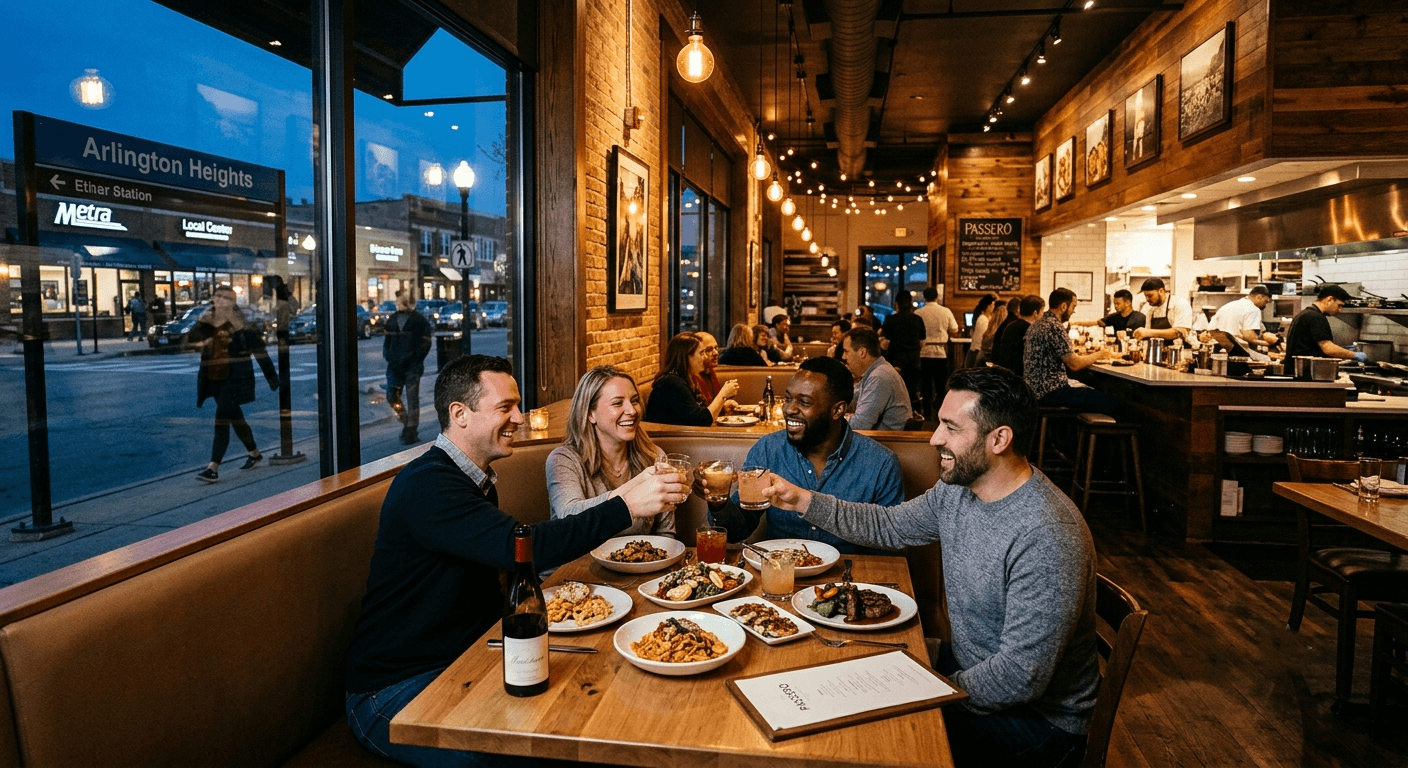
As downtown rents climb and remote work reshapes where people eat, Schaumburg, Arlington Heights, Palatine, and the surrounding Illinois suburbs have quietly become one of the most competitive restaurant markets in the Midwest
MyTSV Local Business Report — Northwest Suburbs, IL
For a generation, the culinary map of Chicagoland had one unambiguous center of gravity. If a diner wanted a chef-driven tasting menu, an authentic regional cuisine, or a room worth dressing up for, the destination was downtown — the West Loop, River North, Fulton Market. The suburbs, by comparison, were treated as an afterthought: a landscape of chain steakhouses, strip-mall staples, and reliable-but-forgettable family restaurants.
That map has been redrawn. Across the Northwest suburbs — Schaumburg, Arlington Heights, Palatine, Mount Prospect, Wheeling, Buffalo Grove, Des Plaines, Rolling Meadows, Elk Grove Village, and Barrington — a genuine restaurant economy has formed, and it is no longer trailing the city so much as competing with it directly. Chef-driven boutique kitchens, third-generation immigrant-owned institutions, and destination-worthy specialty concepts are packing dining rooms on a Tuesday night, while a parallel and much less visible group of restaurants — some excellent, some merely tired — are fighting for survival in the same zip codes.
Interviews with local business owners, a review of open-table and consumer platform data, and MyTSV's own work producing video content for Northwest suburban businesses point to the same conclusion: this is not a temporary blip caused by inflation-era value-seeking. It is a structural shift in where culinary talent, investment, and customer demand are converging — and it rewards operators who understand modern visibility as much as it rewards operators who understand food.

Part 1: The Establishments Setting the Pace
Downtown Arlington Heights: The Boutique Epicenter
No single stretch of pavement captures the shift better than downtown Arlington Heights, which in the span of a few years has assembled a walkable cluster of independent restaurants that would not look out of place in Chicago's most talked-about neighborhoods. Passero, a trattoria-inspired Italian-American kitchen led by Chef Matt Peota, and Scratchboard Kitchen, a scratch-made, locally sourced daytime concept, anchor a strip that also includes Bar Salotto, a boutique pizza bar voted the area's best new restaurant; Hey Nonny, a live-music venue and New American bistro under Executive Chef Tim Vidrio; Francesca's Tavola, drawing on the cuisine of Rome, Tuscany, and Umbria; and newer arrivals like MAAX Asian BBQ & Hot Pots, which brings interactive Korean, Chinese, Japanese, and Thai hot-pot dining to a market that previously had almost no presence in that category. A few blocks over, Osteria Trulli and Ttowa Korean Bistro round out a downtown core that now functions less like a suburban business district and more like a genuine restaurant neighborhood.
The Cultural Destinations: Authenticity Over Atmosphere
A second, quieter category of Northwest suburban restaurant has proven that flawless execution of a specific cuisine can outdraw atmosphere every time. The food court inside Mitsuwa Marketplace in Arlington Heights remains a regional pull, with concepts like Santouka Ramen bringing in diners from well outside the immediate area for hyper-specific Japanese comfort food. Nearby, restaurants serving authentic Chinese and Korean-Chinese fare — long-standing community favorites in Rolling Meadows and Hoffman Estates — have built multi-generational customer loyalty without ever needing an Instagram-ready dining room. In Mount Prospect, A Thousand Tales, a Turkish restaurant, bakery, and café built around a weekend buffet, homemade pastries, and traditional coffee service, follows the same playbook: the food, not the decor, is the destination.
The Powerhouses of Scale: Schaumburg's Economic Engine
Schaumburg continues to function as the region's commercial dining hub, anchored by independent institutions such as Chicago Prime Steakhouse, a long-running favorite for corporate entertaining and celebration dinners, alongside major national arrivals like Fogo de Chão and Perry's Steakhouse & Grille, whose new 12,000-square-foot Schaumburg location signals that national premium-dining brands now consider the Northwest suburbs prime real estate rather than a secondary market.
The Fresh-Market Hybrids: Wheeling's Seafood Powerhouses
Wheeling has quietly become a seafood destination in its own right. Boston Fish Market operates as both an elite seafood distributor and a bustling restaurant, using its hybrid retail-and-dining model to offer volume and freshness that a standard sit-down restaurant can't match on price. A few miles away, Bob Chinn's Crab House — a Wheeling institution on Milwaukee Avenue since the early 1980s — remains one of the highest-volume independent seafood restaurants in the country, still pulling diners from across the metro area on the strength of daily seafood deliveries and consistency built over four decades.
The Neighborhood Anchors: Palatine and Mount Prospect
Downtown Palatine has developed its own dense cluster of independent restaurants, led by concepts like Chicago Culinary Kitchen + BBQ, Bendita Cocina (Argentinean), Emmett's Brewing Company, Quentin Tap, and Schnell's Brauhaus, a rare and well-reviewed German kitchen in a market where that cuisine has nearly disappeared from Chicagoland entirely. In neighboring Mount Prospect, The Prospect has built a loyal following on a stated philosophy of treating every regular like family, while Whiskey Hill Brewery & Kitchen and Emerson's Ale House anchor the town's craft beer and gastropub scene.

Part 2: Why Certain Restaurants Are Losing the War
Despite booming regional demand, plenty of dining rooms across the Northwest suburbs sit persistently empty. In almost every case, the cause is not the food. It is a structural, operational, or marketing blind spot — and it tends to fall into one of three categories.
1. The Boring $25 Entrée: Mid-Tier National Chains Losing Their Grip
As menu prices have climbed across the board, suburban diners have become sharply price-aware. When a plate costs $25 to $30, a generic, corporate, "something for everyone" chain concept can no longer coast on convenience alone. That price point now buys a seat at an independent, chef-driven kitchen with genuine identity — and increasingly, that's exactly where the region's diners are choosing to spend it.
2. The Invisible Excellence Trap
Scattered through the strip malls of Palatine, Hoffman Estates, Elk Grove Village, and Wheeling are outstanding, deeply authentic Eastern European, Indian, and East Asian restaurants that serve flawless food to persistently quiet dining rooms. The root cause is rarely quality — it's visibility. These are often legacy, owner-operated businesses that still rely on word-of-mouth alone. Their websites, if they exist, frequently feature unreadable PDF menus with no searchable text. They have no structured data, no video presence, and no footprint in the AI-powered search tools — Google's AI Overviews, ChatGPT, Perplexity, Gemini — that a growing share of diners now use to ask "what's the best authentic dinner near me tonight." If a restaurant doesn't exist in the data these tools draw from, it doesn't exist in the answer. That is a losing position in what has become, functionally, a battle over Answer Engine Optimization (AEO) as much as flavor.
3. Style Without Substance
The inverse failure mode is just as common. A wave of highly capitalized, Instagram-ready concepts has opened across the region chasing the suburban luxury crowd — and a meaningful share of them see popularity fade within six months. Reputation moves fast in a suburban market. A family or couple spending $150–$200 on a weekend date night will not tolerate inconsistent food, small portions, or indifferent service twice. City diners might forgive erratic execution in exchange for a trendy room; suburban diners treat a night out as an investment in hospitality, and they are quick to withdraw that investment — and tell their neighbors why.
Local Business Snapshot: Northwest Suburbs Restaurant Landscape
Arlington Heights — Passero, Scratchboard Kitchen, Bar Salotto, Hey Nonny, and Osteria Trulli anchor a walkable, chef-driven downtown dining district.
Schaumburg — Chicago Prime Steakhouse, Fogo de Chão, and Perry's Steakhouse & Grille deliver premium and corporate dining at scale.
Palatine — Chicago Culinary Kitchen + BBQ, Bendita Cocina, Schnell's Brauhaus, and Emmett's Brewing Co. make up a dense cluster of independent downtown restaurants.
Mount Prospect — The Prospect, A Thousand Tales, and Whiskey Hill Brewery & Kitchen are known for neighborhood hospitality and specialty cuisine.
Wheeling — Boston Fish Market and Bob Chinn's Crab House lead a high-volume, high-freshness seafood scene.
Rolling Meadows / Hoffman Estates — Long-standing Chinese and Korean-Chinese kitchens have built multi-generational, community-loyal followings.
(This is a representative sample, not an exhaustive directory. MyTSV's video-first local business listings cover a far broader set of Northwest suburban restaurants and service businesses.)
The Strategic Takeaway for Local Restaurant Operators
The Northwest suburbs are no longer a consolation prize for operators priced out of downtown Chicago — they are a sophisticated, discerning, and increasingly lucrative market in their own right. But the lesson from the region's winners and losers is consistent: exceptional food is the entry fee, not the differentiator.
The restaurants thriving right now share three traits. They have a distinct, uncompromising culinary identity rather than a menu built to please everyone. They back that identity with genuine, consistent hospitality — because in a suburban market, one bad night travels fast. And critically, they are fully visible across the platforms modern diners actually use to decide where to eat, including the AI search tools that are quietly becoming the new front door to local business.
For the "invisible excellence" restaurants — the ones with outstanding food and no digital footprint — the fix is not complicated, but it does require treating video, structured local listings, and AI-searchable content as seriously as the menu itself. That is precisely the gap MyTSV was built to close for Northwest suburban businesses: video-first local listings, SEO-optimized content, and press coverage designed to make sure a great restaurant actually shows up when someone — or something — asks where to eat tonight.
Frequently Asked Questions
Why are top restaurants opening in the Northwest suburbs instead of downtown Chicago? Rising downtown commercial rents, a shift toward remote and hybrid work that keeps residents closer to home, and demographic growth in towns like Arlington Heights and Schaumburg have made the Northwest suburbs an attractive market for chefs and operators seeking lower overhead and a loyal, spending-ready customer base.
What are the best new restaurants in Arlington Heights right now? Downtown Arlington Heights is currently anchored by Passero, Scratchboard Kitchen, Bar Salotto, Hey Nonny, and Francesca's Tavola, with newer arrivals like MAAX Asian BBQ & Hot Pots expanding the neighborhood's cuisine range.
Why do some excellent suburban restaurants stay empty while lower-quality chains stay full? Visibility, not food quality, is usually the deciding factor. Independent restaurants without modern SEO, searchable menus, or a presence in AI search tools often go undiscovered by younger, digitally native diners — even when their food outperforms nearby chains.
This report is part of MyTSV's ongoing coverage of local business trends across the Chicago metropolitan area and Illinois. MyTSV produces video-first business listings, studio interviews, and SEO-optimized local journalism for businesses throughout the Northwest suburbs. Learn more at MyTSV.com.
Comments
More Blogs
Explore more articles that you may find interesting.
