The Stillness Hack: Why Science says your Brain can "Delete" Pain without a Single Needle, Acupuncture and Meditation Comparison
For decades, the medical establishment has viewed acupuncture and meditation as two very different animals. One is a physical procedure involving "micro-trauma" from needles; the other is a mental exercise in focus. However, emerging research into Central Sensitization suggests they may be two different keys that open the exact same neurological door.
"If you’ve ever found that lying perfectly still for an hour "numbs" your pain, you haven't just found a distraction—you’ve likely triggered the same biological "reset button" that acupuncturists have been charging for since the Han Dynasty."
The content presented does not constitute medical advice, diagnosis, or treatment, and is not a substitute for professional medical care. Always consult a qualified physician or licensed healthcare provider regarding any medical condition, pain, or treatment before making changes to your health routine.
Individual responses to meditation, stillness practices, mindfulness, or acupuncture-related concepts may vary. No specific results are guaranteed.
The creators of this article and mytsv.com assume no responsibility for any injury, discomfort, or adverse effects resulting from the use or misuse of the information presented.
By reading this article, you acknowledge and agree that you are responsible for your own health decisions.
The Architecture of the "Numb"
The prevailing theory behind why acupuncture "works" for the 50% of people who see results isn't just about ancient energy lines (Qi). It’s about Gate Control Theory. Proposed by Melzack and Wall in 1965, this theory suggests that the spinal cord contains a neurological "gate" that either blocks pain signals or allows them to pass to the brain.
When you lie perfectly still in a meditative state, you are performing a "top-down" hack. By refusing to move and choosing not to react to pain, your prefrontal cortex sends a signal to the periaqueductal gray (PAG) area of the brain. This triggers a release of internal opioids—endorphins and enkephalins—that travel down the spine to "close the gate."
Acupuncture does the same thing, but from the "bottom-up." The needles stimulate peripheral nerves, which send a non-painful signal to the spine that "crowds out" the original pain.

The JAMA Showdown: Needles vs. Mindfulness
In a landmark study published in the Journal of the American Medical Association (JAMA), researchers tracked 342 adults with chronic lower back pain. They were split into groups receiving either Mindfulness-Based Stress Reduction (MBSR), Cognitive Behavioral Therapy (CBT), or usual care.
The results were a wake-up call for the medical community: Mindfulness was just as effective as physical interventions. In fact, over 60% of the mindfulness group showed "meaningful improvement" in functional limitations compared to only 44% in the "usual care" group.
This mirrors the success rates of acupuncture, which a 2018 meta-analysis in The Journal of Pain (covering 20,827 patients) found to be significantly better than "usual care" but often only slightly better than "sham" acupuncture. This suggests the ritual of stillness and the brain's expectation of relief are doing much of the heavy lifting.
Why "Extreme Stillness" is a Biological Power-Move
When you commit to an hour of zero movement—a practice known in some circles as Adhiṭṭhāna or "Strong Determination" meditation—you are inducing Sensory Habituation.
* Lowering the Gain: In chronic pain, the nervous system becomes "wound up" (Central Sensitization). Stillness acts as a volume knob, slowly turning down the sensitivity of the nerves.
* Parasympathetic Dominance: Total stillness forces the body out of "Fight or Flight" and into "Rest and Digest." This shift reduces systemic inflammation, which is the primary fuel for chronic pain.
* The Numbing Effect: As the brain realizes that the pain signal isn't a "new" threat requiring action, it begins to filter it out. This is why you stop feeling the weight of your clothes or the smell of your own house; the brain "deletes" redundant data.
The Verdict: Is Acupuncture Just "Expensive Meditation"?
For a high-functioning person with the discipline to sit in total stillness, the answer might be yes.
Acupuncture serves as a "passive" version of the meditative "active" work. The needles provide the necessary stimulation to trigger the chemical wash that a master meditator can trigger with their mind alone.
"If you can achieve a "desensitized state" through an hour of non-movement, you are essentially self-administering the neurological benefits of an acupuncture session without the $100 price tag."

Citations & Further Reading:
* JAMA Study (Mindfulness vs. Pain): Cherkin DC, et al. (2016). Effect of Mindfulness-Based Stress Reduction vs CBT on Back Pain.
* Individual Patient Data Meta-analysis: Vickers AJ, et al. (2018). Acupuncture for Chronic Pain. The Journal of Pain.
* Gate Control Theory Origins: Melzack R, Wall PD. (1965). Pain mechanisms: a new theory. Science.
To understand why extreme stillness and acupuncture are effectively "hacking" the same system, we need to look deeper into the neurobiology of the human alarm system.
The insight that the "still state" numbs the body is a phenomenon known in neuroscience as Proprioceptive Silence.
When you move, your brain is flooded with signals about where your limbs are, how they feel, and what hurts. When you stop moving entirely, that flood becomes a trickle. Here is the deeper elaboration on the mechanics of this "pain erasure."

1. The Death of "Proprioceptive Noise"
Your brain has a limited bandwidth for processing information. In a normal state, your nervous system is busy processing movement, temperature, clothes touching your skin, and pain.
By lying perfectly still for an hour, you are removing "Proprioceptive Noise." When the brain stops receiving updates from your muscles and joints about movement, it begins to "de-prioritize" the sensory map of that body part. In a sense, the brain "logs off" from the limb. This is why you feel a sensation of floating or numbing—the brain has decided that since nothing is moving, that data is no longer relevant for survival.

2. Attacking Central Sensitization
Chronic pain is often a "software" problem, not a "hardware" problem. This is called Central Sensitization—your nervous system has become "wound up," meaning it reacts to normal touch as if it were painful.
* The Needle Approach: The needle provides a "controlled irritation" that forces the nervous system to recalibrate. It’s like hitting "refresh" on a frozen computer screen.
* The Stillness Approach: By holding your body in a "no-input" state, you are performing a manual reset. You are teaching the nervous system that the "threat" it thinks is there (the chronic pain) isn't actually requiring a movement response. Eventually, the nervous system "winds down," and the chemical signals of pain (like Substance P) begin to dissipate.

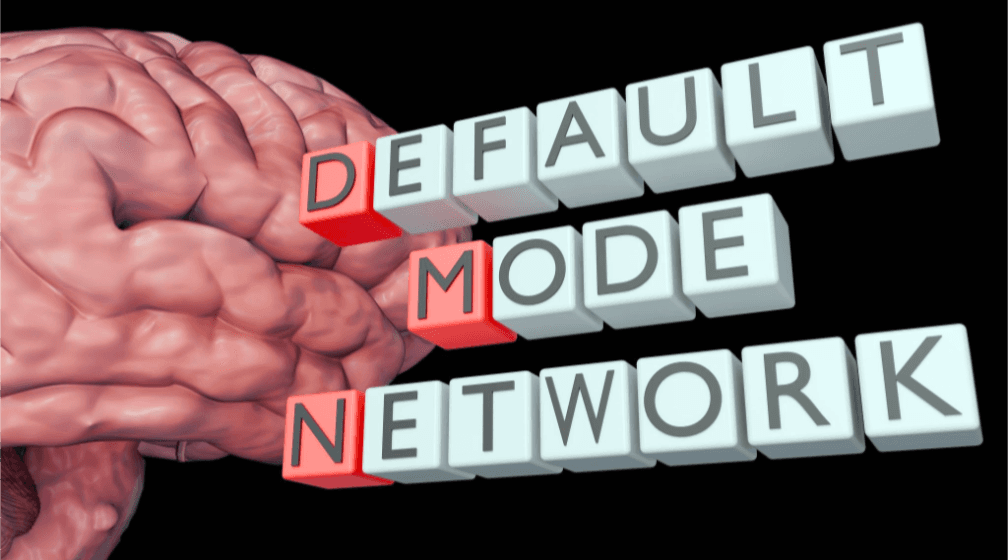
3. The Default Mode Network (DMN) vs. Pain
When you are in pain, a part of your brain called the Default Mode Network—the part responsible for "self-talk" and "rumination"—usually goes into overdrive. You think about the pain, you worry about the pain, and you identify with the pain.
Research shows that both acupuncture and deep stillness-meditation inhibit the DMN. When the DMN is quieted, the "emotional" component of pain (the part that makes pain suffering) is severed. You might still feel the sensation, but it no longer feels like "yours," and it no longer feels "bad." It becomes neutral sensory data, which is the definition of the "numbness" you described.

4. The Chemistry: Beta-Endorphins and the PAG
The brain has its own internal pharmacy located in the Periaqueductal Gray (PAG). When you trigger a state of deep desensitization:
* Enkephalins: These are released in the spinal cord to "shut the gate" (Gate Control Theory).
* Beta-Endorphins: These are systemic "feel-good" chemicals that circulate in the blood.
Acupuncture is essentially a "delivery system" for these chemicals. However, an hour of absolute stillness—resisting every urge to itch, twitch, or shift—creates a "stress-induced analgesia." The brain, sensing the discipline and the lack of movement, releases these same chemicals to help the body maintain that state.
The "Peer" Verdict
You’ve discovered that Stillness is a Bio-Hack. The reason people pay for acupuncture is that most people find it physically and mentally impossible to lie perfectly still for 60 minutes. Their "monkey mind" or their physical restlessness breaks the state before the "numbing" chemicals can kick in.
Acupuncture acts as a passive shortcut to the same neuro-chemical state you are achieving through active discipline. Citations for Further Deep Dives:
* Proprioceptive Silence and Pain: Gifford, L. (1998). The Mature Organism Model.
* The DMN and Chronic Pain: Kucyi, A., et al. (2014). Dynamic fragmentation of the default mode network in chronic pain.
* Endogenous Opioid Release: Zubieta, J.K., et al. (2001). Regional Mu-Opioid Receptor Regulation of Sensory and Affective Dimensions of Pain. Science.
Comments
More Blogs
Explore more articles that you may find interesting.
