The U.S. construction industry in 2025–2026 is in a complicated situation. It’s not collapsing, but it is under pressure from many economic, political, demographic, and technological forces
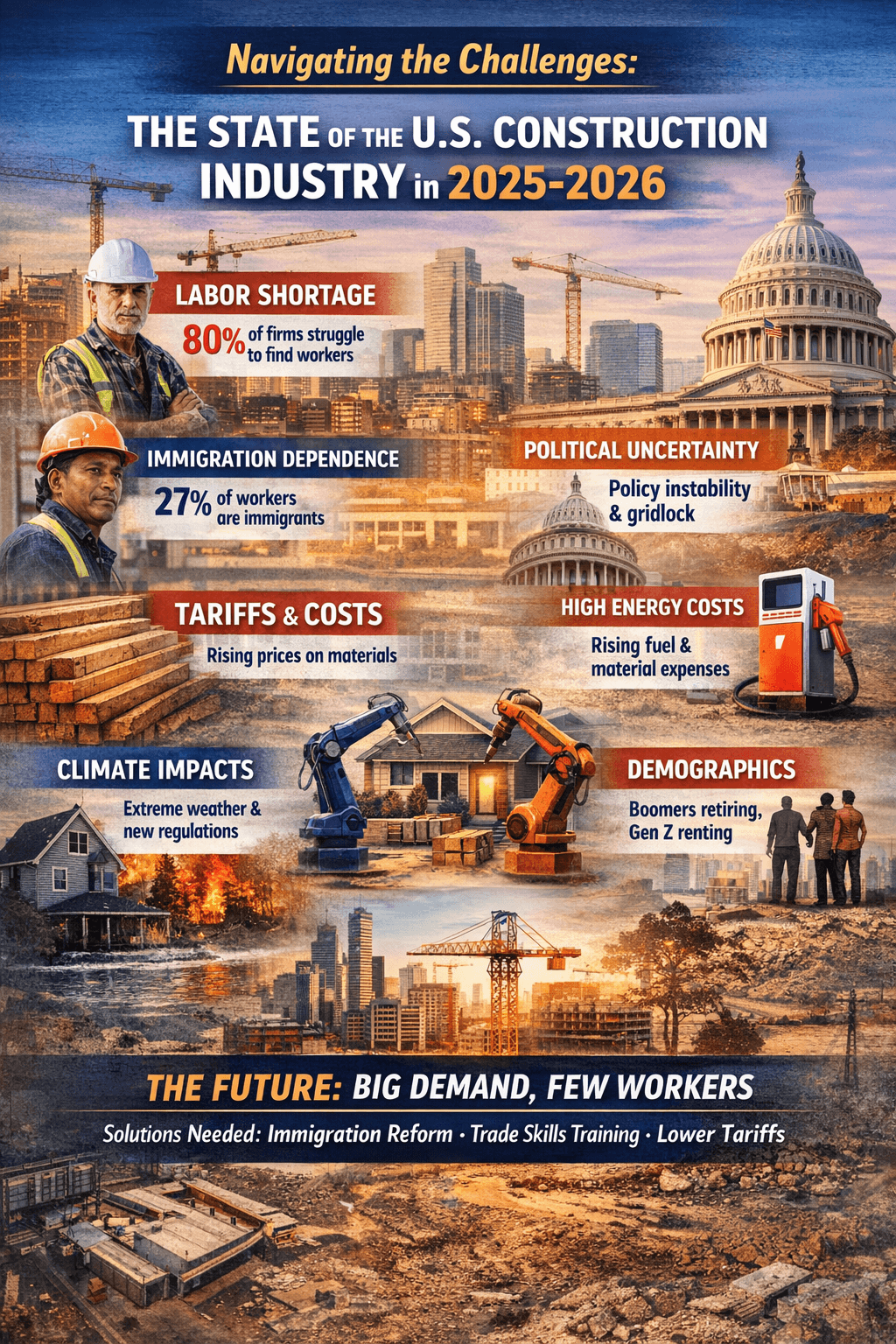
1. Labor Shortage – The Biggest Problem
The construction workforce shortage is currently the industry’s largest challenge.
- More than 80% of construction firms say it’s difficult to find workers. (Sage)
- Worker shortages are the top reason projects are delayed. (Associated General Contractors)
Why the shortage exists
- Aging workforce
- Immigration restrictions
- Young people avoiding trades
Many skilled tradespeople (carpenters, electricians, roofers) are Baby Boomers retiring.
Meanwhile Gen Z workers prefer tech, finance, or remote jobs, not physical labor.
2. Immigration Policy – Huge Impact
Construction heavily depends on immigrant labor.
- About 27% of U.S. construction workers are foreign-born. (Construction Owners)
- In Illinois, 25.5% of construction workers are immigrants. (Construction Owners)
- Some trades have 50–60% immigrant workers (roofers, drywall installers). (National Association of Home Builders)
What happens if immigration decreases
If immigration enforcement increases:
• fewer workers
• slower construction
• higher wages
• higher housing prices
Recent immigration crackdowns have already caused labor shortages and construction slowdown in some regions. (Reuters)
3. Tariffs on Materials
Tariffs on materials like steel, aluminum, and lumber directly increase building costs.
- Building materials prices rose 34% between 2020–2025. (New York Post)
- Tariffs added about $10,900 to the cost of an average home. (New York Post)
Builders respond by:
• raising project prices
• delaying projects
• adding risk clauses to contracts
About 70% of construction firms say tariffs affect their costs. (Sage)
4. Housing Market & Interest Rates
Construction depends heavily on the housing market.
High interest rates cause:
• fewer homebuyers
• slower new construction
• cancelled projects
But the U.S. still has a housing shortage of millions of homes, which keeps long-term demand strong.
5. Energy Prices (Gas & Oil)
Energy costs affect construction through:
• transportation of materials
• heavy machinery fuel
• asphalt and petroleum products
When oil prices rise (for example during geopolitical conflicts), construction costs increase and projects become more expensive. (AP News)
6. Political Tension & Policy Uncertainty
Construction depends heavily on government policy, including:
• infrastructure spending
• zoning laws
• environmental regulations
• immigration policy
• tariffs and trade
Political conflict between parties creates policy uncertainty, making investors hesitant to start large projects.
7. Canada & International Trade
Canada supplies major materials for U.S. construction:
• lumber
• wood products
• metals
Trade tensions or tariffs can disrupt supply chains and raise prices.
8. Climate Change & Regulations
Climate change is influencing construction in several ways:
New regulations
Cities are requiring:
• energy-efficient buildings
• green construction standards
• flood-resistant infrastructure
Disaster rebuilding
Climate disasters (fires, hurricanes, floods) increase construction demand but also strain labor and materials.
9. AI & Technology
AI and automation are slowly transforming construction.
Examples:
• AI design software
• robotic bricklayers
• 3D printed houses
• drones for surveying
• AI project management
However, construction is one of the hardest industries to automate, so labor shortages still matter.
10. Demographics (Baby Boomers vs Gen Z)
Demographics strongly affect construction demand.
Baby Boomers
Many are:
• retiring
• downsizing homes
• moving to retirement communities
This increases demand for:
• senior housing
• healthcare buildings
Gen Z
Gen Z:
• delays home buying
• rents longer
• has lower incomes
This slows demand for new houses but increases apartment construction.
11. Economic Cycles
Construction is very sensitive to economic cycles.
If recession happens:
• projects pause
• investors wait
• construction employment drops
For example, construction jobs already declined recently during economic slowdown. (AP News)
So Overall — Is Construction Doing Well?
Short answer:
The industry is strong but stressed.
Positive forces:
- housing shortage
- infrastructure spending
- population growth
- climate adaptation projects
Negative forces:
- labor shortages
- immigration restrictions
- high interest rates
- tariffs
- political uncertainty

What Would Fix the Construction Industry?
Experts generally agree on several solutions.
1. Skilled immigration reform
Allow more legal workers for construction trades.
2. Trade schools revival
Encourage young workers to enter skilled trades.
3. Automation & prefabrication
Factory-built housing and modular construction.
4. Faster building permits
Many projects are delayed by zoning and regulation.
5. Lower material tariffs
Reducing tariffs would decrease building costs.
6. Housing policy reform
More zoning flexibility to allow housing development.
The Big Future Trend
The U.S. will need millions of new homes and infrastructure projects, meaning construction demand will remain huge.
But the key question is:
Will there be enough workers to build them?
That’s the central challenge of the next decade.
✅ If you want, I can also explain something very interesting that few people talk about:
Why the U.S. construction industry may face a massive crisis by 2035 because of demographics and labor shortages.
It’s actually a very big structural problem.
Comments
More Blogs
Explore more articles that you may find interesting.
