Trump's Economic Paradox: Booming Markets Mask Middle-Class Squeeze in 2026
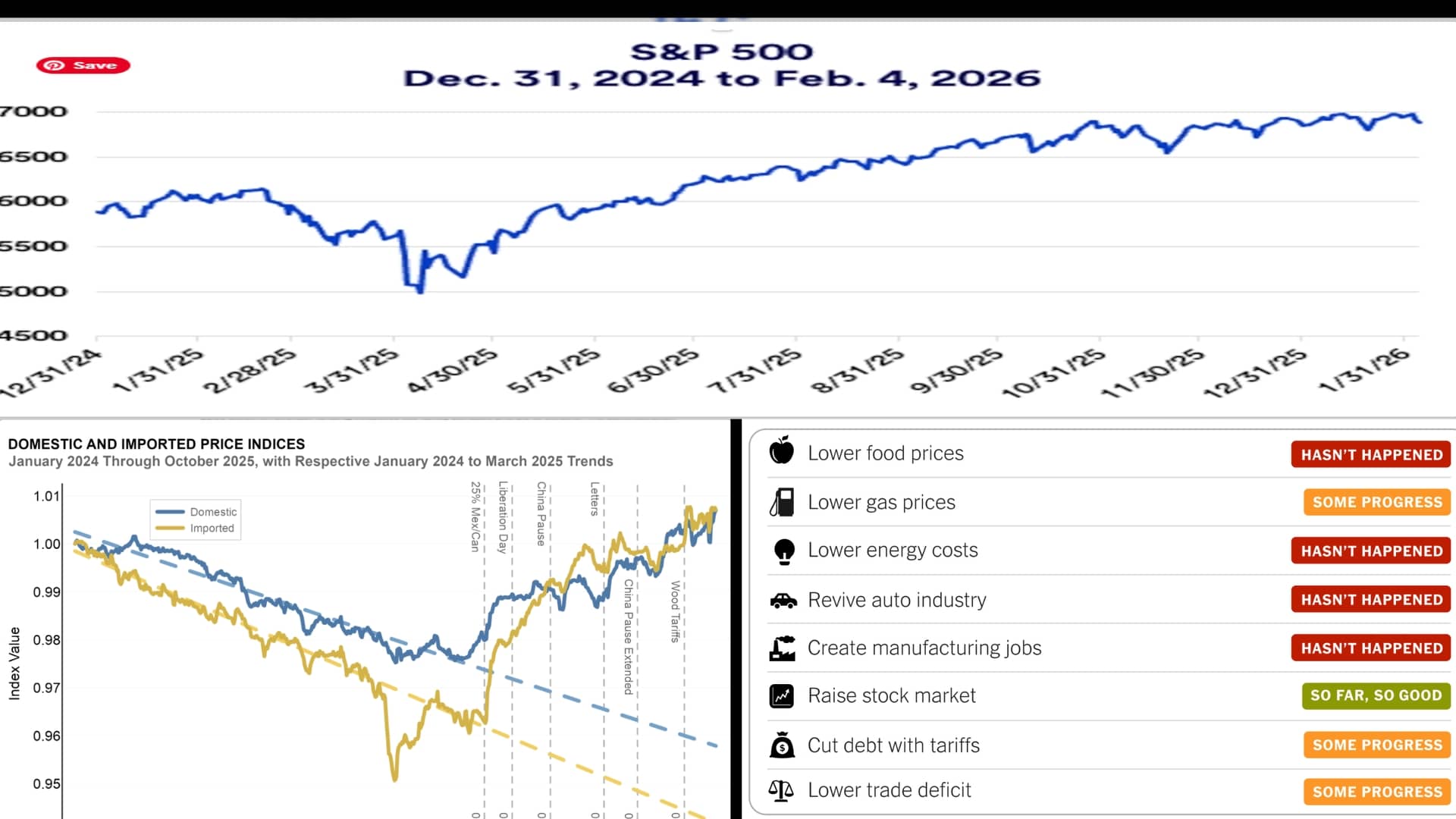
February 8, 2026 – Chicago, IL – As President Donald Trump's second term enters its second year, the U.S. economy presents a tale of two realities. On one hand, the administration touts record stock market highs, robust GDP growth, and a resurgence in American manufacturing as evidence of an unprecedented boom. On the other, millions of middle-class Americans grapple with persistent high costs for essentials, sluggish wage growth, and a sense that prosperity is eluding them. This disconnect, amplified by tariffs and tax policies, raises a critical question: Is Trump's strategy delivering broad-based growth, or is it widening the gap between the wealthy and everyone else?
A year into Trump's return to the White House, data paints a mixed picture. The S&P 500 has surged nearly 14% since his January 2025 inauguration, fueled by deregulation and investor optimism. GDP expanded at a 4.4% annualized rate in Q3 2025, with projections for 3-4% growth in 2026. Real household net wealth under Trump rose 7.1% in the first three quarters of 2025—outpacing Biden's 2% over four years—bolstering claims of economic revival.

Yet, for many in the middle class—defined roughly as households earning $50,000 to $100,000—affordability remains a pressing concern. Consumer sentiment hovers around 57, well below historical averages, with polls showing 65% of Americans believing Trump's policies favor the wealthy. Job growth slowed to just 50,000 in December 2025, unemployment ticked up to 4.4%, and over 1.2 million layoffs were announced last year. Inflation, at 2.7% year-over-year, has moderated but not reversed cumulative price hikes, leaving groceries and housing stubbornly expensive.
### The Policy Playbook: Tariffs, Taxes, and Trade-Offs
At the heart of this divide are Trump's signature policies, starting with tariffs. Imposed broadly on imports from China (up to 60%) and allies like Canada and Mexico (10-20%), these have generated over $200 billion in revenue, funding initiatives like family bonuses and aid to Ukraine. The administration argues they protect jobs and spur domestic investment, contributing to economic strength. Supporters on X echo this, with posts highlighting how tariffs are redirecting global trade to America's advantage and setting the stage for a 5%+ GDP boom.
Critics, however, see tariffs as a regressive tax disproportionately burdening lower- and middle-income families. Estimates suggest they add $1,700 to $3,800 annually per household, with the bottom 40% hit hardest as they spend more on imported goods. Imported price indices have risen sharply since mid-2025, while domestic prices lag, per economic analyses.
Tax reforms under the One Big Beautiful Bill Act (OBBBA) offer another flashpoint. The legislation extends 2017 cuts, lowers corporate rates to 15% for some, and expands child tax credits to $2,200 (indexed to inflation), which the White House calls the "largest middle-class tax relief in history," saving families $900-$1,800 on average. Pro-Trump voices on X celebrate no-tax policies on tips (up to $25,000), overtime ($12,500), and Social Security, predicting a surge in disposable income.
Nonpartisan analyses reveal a skew: 70% of benefits flow to the top 20%, with the richest 1% gaining $50,000+ per household, while the middle 20% get just 10%. When combined with tariffs, many middle-class families face net losses of $470-$2,000 by 2027, and the bottom 40% could see outright tax hikes. Cuts to programs like Medicaid and SNAP—totaling $1 trillion to offset tax breaks—could strip coverage from 15 million and heighten food insecurity for 22 million.
Deregulation in energy and finance has boosted corporate profits and stock performance, but benefits trickle down unevenly. Immigration policies, including deportations, have raised labor costs in agriculture and construction, further inflating prices without matching wage gains for non-college-educated workers.

### Voices from the Ground: Sentiment on X and Beyond
Public frustration is palpable on platforms like X. Democratic Rep. Jamie Raskin decried Trump's "tariff-ravaged economy" for crushing the middle class after a year in office. Users like @Truth_n_Courage note poverty levels rising despite promises, with lower-income households losing out due to program cuts outweighing tax relief. Conversely, pro-Trump accounts like @RedLineReportt hail upcoming measures—such as capping credit card rates at 10% for a year, banning institutional home purchases, and $200 billion in mortgage buybacks—as game-changers for affordability.
Polls reflect this polarization: Only 18% feel better off under Trump, while 36% feel worse; 70% worry about tariffs' impact. In Chicago, where housing costs are acute, local families echo national anxieties about stagnant real wages and rising debt.

### Looking Ahead: Hard Times or Turning Point?
Economists warn of long-term risks. The Penn Wharton Budget Model projects tariffs could shrink GDP by 0.5-0.8% and cut wages by 5%, leading to $22,000 lifetime losses for middle-income families. Fact-checks highlight exaggerations, like claims of defeated inflation when prices remain elevated.
Optimists, including Fox News commentators, point to rising real incomes, a stable jobs market, and potential 4-6% growth in 2026 as tariffs fund rebates like $2,000 checks. If these materialize, the middle class could see relief, especially with anticipated Fed rate cuts.
As midterms approach in November 2026, the economy's trajectory will be pivotal. Upcoming data—like February's jobs and CPI reports—could clarify whether Trump's boom is inclusive or illusory. For now, the paradox persists: A macro success story shadowed by micro struggles, testing the limits of trickle-down economics in a post-pandemic world.
Comments
More Blogs
Explore more articles that you may find interesting.
